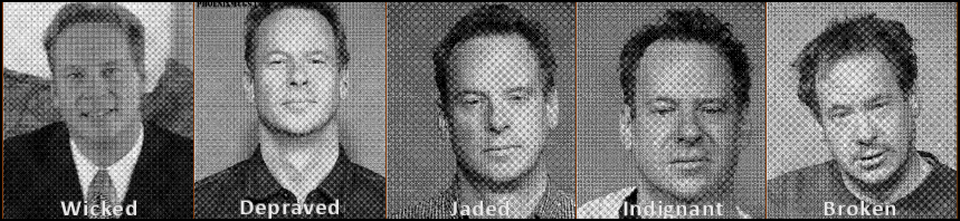
In a recent podcast episode entitled, “Biblical Forgiveness Isn’t What You’ve Been Told,” Alisa Childers interviews Teasi Cannon to discuss biblical forgiveness, and promote Teasi’s upcoming book.
The premise of the message is this: “Biblical forgiveness cannot happen without repentance.” Teasi describes the releasing of another’s debt unilaterally (Mark 11:25) and entrusting justice to God (Romans 12:19), without the offender repenting, as an unbiblical, therapeutic model of forgiveness:
“A psychological technique or process, whereby we remove vengeance, we try to offload negative feelings, for the sake of being free emotionally… This is a psychological process that really looks more like secular self-helpism than anything biblical, at all.”
This is a wildly deceptive assertion, and the fruit of this error is displayed in the comments section, where you can find deceived, unforgiving souls, rejoicing in agreement and without understanding.
Here is an example:
“I so appreciate this right now. I have been struggling with (un)forgiveness towards my brother because I have been hurt by him and there’s no repentance from him. I have been struggling with guilt over my emotions and praying for God to forgive me because I don’t feel I have genuinely forgiven him from my heart. It’s been a major struggle. Biblical forgiveness has been taught wrong for so long. I would read those passages brought up in your video and often wondered if forgiveness was taught wrong but I thought maybe I was wrong and didn’t dive deeper. Thank you both for this lesson. I pray the church can see the error in the way forgiveness is taught.”
And a reply:
“I understand also… Any person who throws back in your face ‘If you don’t forgive, God won’t forgive you (implying you go to hell),” those are the modern day Pharisees and I argue they are the snakes going to hell.”
Biblical Forgiveness
There are two distinct and related aspects to biblical forgiveness, as commanded by the Lord our God:
1) The release of the debt – Mark 11:25
This is an internal, legal transaction before and unto God, in which the offended party deliberately and willfully cancels the debt of the offense. God commands us to make a conscious choice of the will, releasing the right to personal retribution, and entrusting justice to God (Romans 12:19).2) Reconciliation (the restoration of relationship) – Luke 17:3-4
When genuine repentance is present, God commands us to pursue the restoration of fellowship with regard to family/ekklesia relationships.
Forgiveness: The release of a debt unto God
In the podcast notes, Alisa Childers’ description for this episode on forgiveness is the following: “Is ‘forgive and forget’ actually biblical—or a modern therapeutic idea Christians have absorbed without realizing it?”
I want to begin here with a response to this initial question. While we do not forget (we don’t get amnesia), 1 Corinthians 13:5 exhorts us to keep no record of wrongs (λογίζεται τὸ κακόν). The ESV uses the term “resentful.” Is being resentful/keeping a record of wrongs, the evidence of unforgiveness? Yes.
If you hold resentments, you have defiled your soul and are actively in sin…
- John Piper describes this as unrepentant sin.
- R.C. Sproul teaches that this constitutes a transgression against God.
- John Macarthur warns that this is a serious offense to God.
Frank Turek teaches that holding onto resentments and unforgiveness is spiritually and personally destructive. He emphasizes that true biblical forgiveness is primarily an act of the will; a deliberate choice to release the debt of offense.
Mike Winger teaches that forgiveness is a Christ-like mandate to release personal bitterness and the desire for revenge, though he distinguishes this from immediate restoration of relationship or trust.
Proverbs 4:23 “Guard your heart with all diligence, for from it flow springs of life.”
Hebrews 12:15 “See to it that no one fails to obtain the grace of God; that no ‘root of bitterness’ springs up and causes trouble, and by it many become defiled.”
Matthew 24:10 “And then (at the end of the age) many will be offended, will betray one another, and will hate one another.”
Proverbs 18:19 “A brother offended is more unyielding than a strong city.”
The offended persons’ hearts grow colder and colder, because the deceitfulness of sin hardens hearts. It is just a period of time before they separate themselves from Christ, and no longer have a love for the Lord, let alone a love for people. This is how people depart from the faith.
Colossians 3:8-13 warns us to forsake anger, wrath, malice, slander, and obscene talk; Paul exhorts us to bear with one another (forbearance), and, if one has a complaint against another, forgiving each other; as the Lord has forgiven us, so we also must forgive.
In his letter to the Ephesians, Paul exhorts us:
Ephesians 4:31-32 “Let all bitterness and wrath and anger and clamor and slander be put away from you, along with all malice. Be kind to one another, tenderhearted, forgiving one another, as God in Christ forgave you.”
In Matthew 18:23-35, the Parable of the Unforgiving Servant, Jesus commands us to forgive “from the heart.” As the parable illustrates, one’s own forgiving of others must grow out of one’s being forgiven. Therefore, to be forgiven and not forgiving, is to have obtained mercy and yet not be merciful, making a mockery over one’s relationship with God.
God’s forgiveness is directed at sins: it removes the guilt (and penalty) of sin and corresponding shame, that reconciliation and right relationship can be restored. Guilt is a legal state and shame is relational.
The believer’s forgiveness, by contrast, demonstrates the grace and mercy of God in our own lives and is aimed at keeping the heart undefiled while placing justice in the hands of God; it does not cover another person’s guilt before God.
We forgive unto the Lord, and from the heart, releasing others from the debt of offense, and thereby making space for reconciliation and restoration. In doing so we glorify God and guard our own hearts against the defilement of bitterness, resentment, and unforgiveness. This is a supernatural work of the Spirit of God.
God is sanctifying the overcoming saints in the truth of His Word, preparing us for the eternal state, when there will be no allowance (nor desire) for resentment, bitterness, and unforgiveness.
God’s redemptive solution…
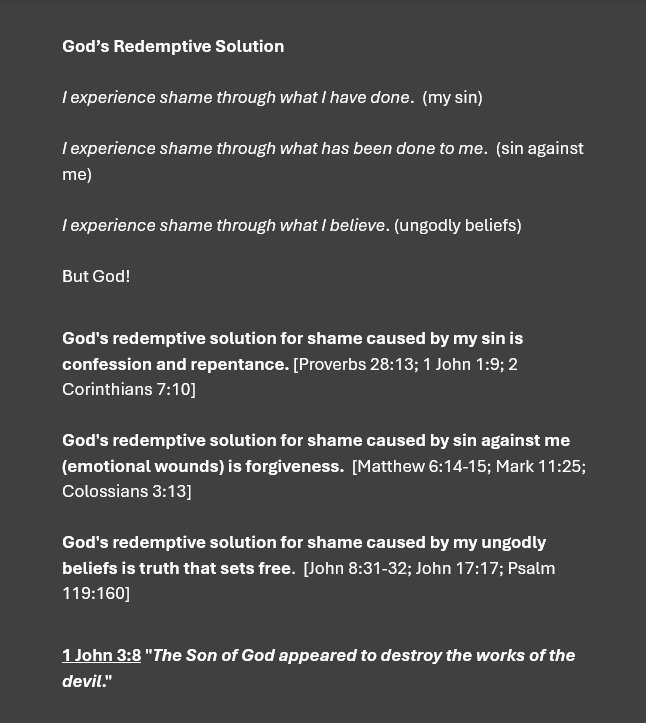
With Jesus Christ Came Grace & Truth
The Mosaic Law, under the old covenant, provided for equal justice between men. Have you heard the phrase, “An eye for an eye?” The Law established proportional, equal justice between people, which restrained excessive vengeance and ensured that the penalty fit the offense.
With the coming of Jesus Christ, the fullness of grace and truth has arrived, calling us beyond a strict retribution, and to a long-suffering, non‑retaliatory, enemy‑love that reflects the very mercy of God.
Luke 6:27-36 “But I say to you who hear, Love your enemies, do good to those who hate you, 28 bless those who curse you, pray for those who abuse you. 29 To one who strikes you on the cheek, offer the other also, and from one who takes away your cloak do not withhold your tunic either. 30 Give to everyone who begs from you, and from one who takes away your goods do not demand them back. 31 And as you wish that others would do to you, do so to them. 32 “If you love those who love you, what benefit is that to you? For even sinners love those who love them. 33 And if you do good to those who do good to you, what benefit is that to you? For even sinners do the same. 34 And if you lend to those from whom you expect to receive, what credit is that to you? Even sinners lend to sinners, to get back the same amount. 35 But love your enemies, and do good, and lend, expecting nothing in return, and your reward will be great, and you will be sons of the Most High, for he is kind to the ungrateful and the evil. 36 Be merciful, even as your Father is merciful.”
God calls us to a counter-cultural love that is sacrificial, and unto the Lord our God. With regard to forgiveness, specifically, the Lord commands us to forgive anyone for anything…
Mark 11:25 “And when you stand praying, if you hold anything (offense) against anyone, forgive them, so that your Father in heaven may forgive you your sins.”
This kind of forgiveness does not require the offender’s acknowledgment, apology, or changed behavior. It is an act of grace, in the Holy Spirit, that the believer performs in relationship with God, handing the gavel of judgment to the Lord and trusting in His justice (Romans 12:19).
This is modeled by Jesus and Stephen…
Luke 23:34 “And Jesus said, ‘Father, forgive them, for they know not what they do.’ And they cast lots to divide his garments.”
Acts 7:58-60 “Then they cast him out of the city and stoned him. And the witnesses laid down their garments at the feet of a young man named Saul. 59 And as they were stoning Stephen, he called out, ‘Lord Jesus, receive my spirit.’ 60 And falling to his knees he cried out with a loud voice, ‘Lord, do not hold this sin against them.’ And when he had said this, he fell asleep.”
Reconciliation: The restoration of close relationships
There is also a forgiveness that Christ commands that leads to the restoration of fellowship between believers; this is called reconciliation.
Luke 17:3-4 “Pay attention to yourselves! If your brother sins, rebuke him, and if he repents, forgive him, 4 and if he sins against you seven times in the day, and turns to you seven times, saying, ‘I repent,’ you must forgive him.”
This passage is specific to family/ekklesia relationships… We cannot have fellowship in Christ with brothers and sisters who are unwilling to acknowledge their sin, and Jesus gives us instruction in these matters in Matthew 18…
Matthew 18:15-20 “If your brother sins against you, go and tell him his fault, between you and him alone. If he listens to you, you have gained your brother. 16 But if he does not listen, take one or two others along with you, that every charge may be established by the evidence of two or three witnesses. 17 If he refuses to listen to them, tell it to the church. And if he refuses to listen even to the church, let him be to you as a Gentile and a tax collector. 18 Truly, I say to you, whatever you bind on earth shall be bound in heaven, and whatever you loose on earth shall be loosed[f] in heaven. 19 Again I say to you, if two of you agree on earth about anything they ask, it will be done for them by my Father in heaven. 20 For where two or three are gathered in my name, there am I among them.”
Forgiveness in this sense is with regard to the restoration of fellowship in Christ, not only the releasing of one’s debt. Can you imagine if someone in your church was openly sinning against you and they refused to repent? Could you continue on in fellowship?
Let’s entertain Alisa and Teasi’s view of forgiveness for a moment—that we never forgive others unless they repent. Some questions arise which require biblical clarity:
Do you believe you know which people, who have sinned against you, have repented and are worthy of your forgiveness?
How do you know when someone who has transgressed against you has repented? What if my unforgiveness is tied to a perceived offense and not an actual sin?
Let’s say I sin against you, and I repent, but you don’t know I have repented. Will your sin of unforgiveness condemn you?
And how does unforgiveness in your heart, against those who have offended you and not repented, shape your view of them? Will you still be able to view them through God’s eyes? And how will it affect your Christian witness to them?
Only God can forgive sin. Our forgiveness to those who have offended us is not to forgive sins, but to release them from a debt, extending the grace and mercy of God to another. Our forgiveness to others is to keep our hearts free from bitterness, malice, and wrath. We give up the right to wrong the offender, entrusting justice to the Lord our God.
Romans 12:19 “Beloved, never avenge yourselves, but leave it to the wrath of God, for it is written, ‘Vengeance is mine, I will repay, says the Lord.’”
Was Mary Johnson wrong to forgive Oshea Israel?
Her testimony… “Unforgiveness is like cancer; it will eat you from the inside out.”
Emily experienced freedom through forgiveness
By obeying Jesus, Emily released her offender from his debt, and kept her soul undefiled. Was she wrong?
Yes, Mary and Emily honored God and blessed people with their obedience. Erika Kirk also demonstrated Christ-like forgiveness that every believer is called to.
What have Christian counselors, pastors, and scholars written on the subject of forgiveness?

In his book, “The Peacemaker: Handling Conflict without Fighting Back or Running Away,” Ken Sande emphasizes the importance of authentic forgiveness in Christian life, highlighting that true forgiveness involves releasing offenders from their debts and not merely offering superficial gestures.
Ken distinguishes between the act of forgiving and the process of reconciliation, which requires the offender’s repentance. Forgiveness is portrayed as a deliberate choice, supported by God’s grace, essential for healing relationships.
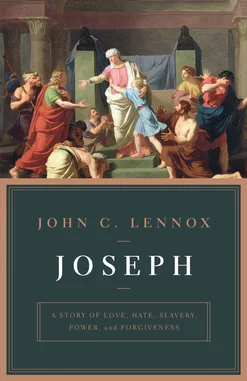 In his book, “Joseph: A Story of Love, Hate, Slavery, Power, and Forgiveness” (Crossway, 2019), scholar John Lennox explores the complex nature of forgiveness, highlighting two aspects:
1) The internal process of letting go of resentment
2) The external act of pardoning an offender, which requires repentance.
He discusses various examples, including personal stories and biblical references, emphasizing that true forgiveness involves both an inward release and an outward acknowledgment of wrongdoing.
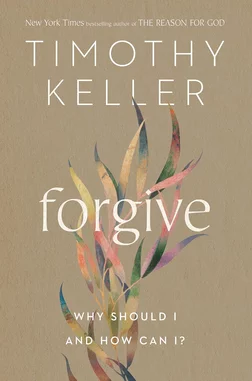 In his book, “Forgive: Why Should I and How Can I?,” Tim Keller centers in on the two biblical aspects of forgiveness as taught by Jesus: immediate forgiveness of offenses regardless of the offender’s repentance (Mark 11:25) and forgiveness contingent upon the offender’s repentance (Luke 17:3-4).
Forgiving “anyone for anything” in a meaningful way is one of the hardest things a person can do. If you do not forgive, resentment and vengeance consume you. It is impossible to move past transgression without forgiveness, and many are deceived into believing that they can hold onto offense.
 In her book, “Living Beyond Offense: Doing the Hard Work of Forgiveness God’s Way,” Yana Jenay Conner characterizes the concept of forgiveness as a merciful decision to release an offender from their debt of offense, using Jesus’s debt analogy.
She emphasizes that true forgiveness does not require an apology or conditions, contrasting it with reconciliation, which involves repentance. Ultimately, forgiveness is essential for personal healing and restoring peace.
 In his book, “Treasures from the Sermon on the Mount, Volume 2,” Rod Mattoon discusses the importance of forgiveness in the Christian faith, emphasizing that true forgiveness involves releasing others from their offenses and not holding grudges.
The book highlights the necessity of a forgiving spirit for receiving God’s forgiveness and the spiritual implications of harboring bitterness. Forgiveness is portrayed as a divine command essential for maintaining fellowship with God.
 In his book, “Surviving Ministry: How to Weather the Storms of Church Leadership,” Michael E. Osborne examines the profound nature of forgiveness, illustrated through the story of Joseph and the aftermath of the Charleston church shooting.
Michael emphasizes that true forgiveness involves recognizing the debt incurred by wrongdoing and voluntarily absorbing the cost, rather than seeking revenge. Forgiveness is a process that may not immediately restore trust but is essential for healing and moving forward.

Praise God that you covered this.
I was concerned when I saw that there was this different twist of what biblical forgiveness truly is. I’ve come to understand that mankind is all guilty of sin. Which God is not, because He is Holy, and He is the only one who does require repentance for sin. The sinner (even if they are a believer) cannot require this same act because, we have all sinned, therefore, we must forgive even if repentance is not given. This is only possible when the Holy Spirit is in our hearts and minds, and when we completely submit to the Word of God and we allow Him to change us into a new creation though studying and loving the Word of God.
Im not sure if the author of this book is suggesting that we are required to forgive as God forgives and through what He requires—repentance. But if they are suggesting this; this isn’t biblical nor is it what Jesus requires us to do. Forgiveness (even in the most extreme circumstances) is possible for the saint of God. It comes through sanctification and total submission to Christ
I’m glad I found this post. You covered many of the thoughts I’ve had ever since I heard about this book. I was a little surprised by the online support. Even Mark Winger supports it. There was also a positive review in the Christian Post. I just attend a local church and wished I had never seen the video. But even I know enough to understand this teaching is off base. Jesus shows us unconditional forgiveness through his grace forgiving past, present and future sins and shows common grace to all of mankind. Imagine if he treated us conditionally; according to our sins. I don’t think this will influence my church denomination but I do wonder how it will impact the non-denominational church. God Bless you.